Billie rug by Poltrona Frau, hand-woven wool with geometric patterns inspired by Italian design.

Billie | Rug

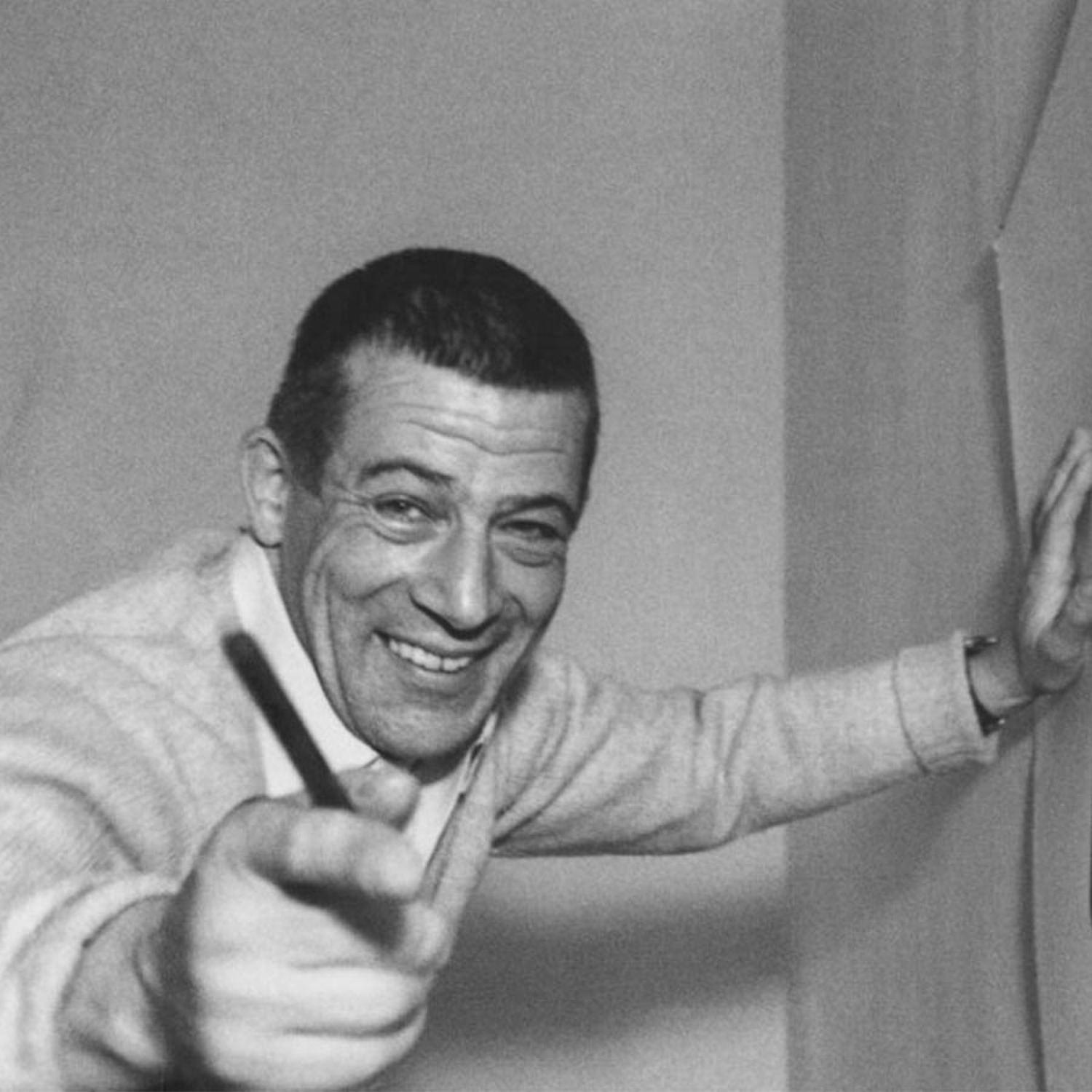
Max Huber

Starting from
€ 12.810

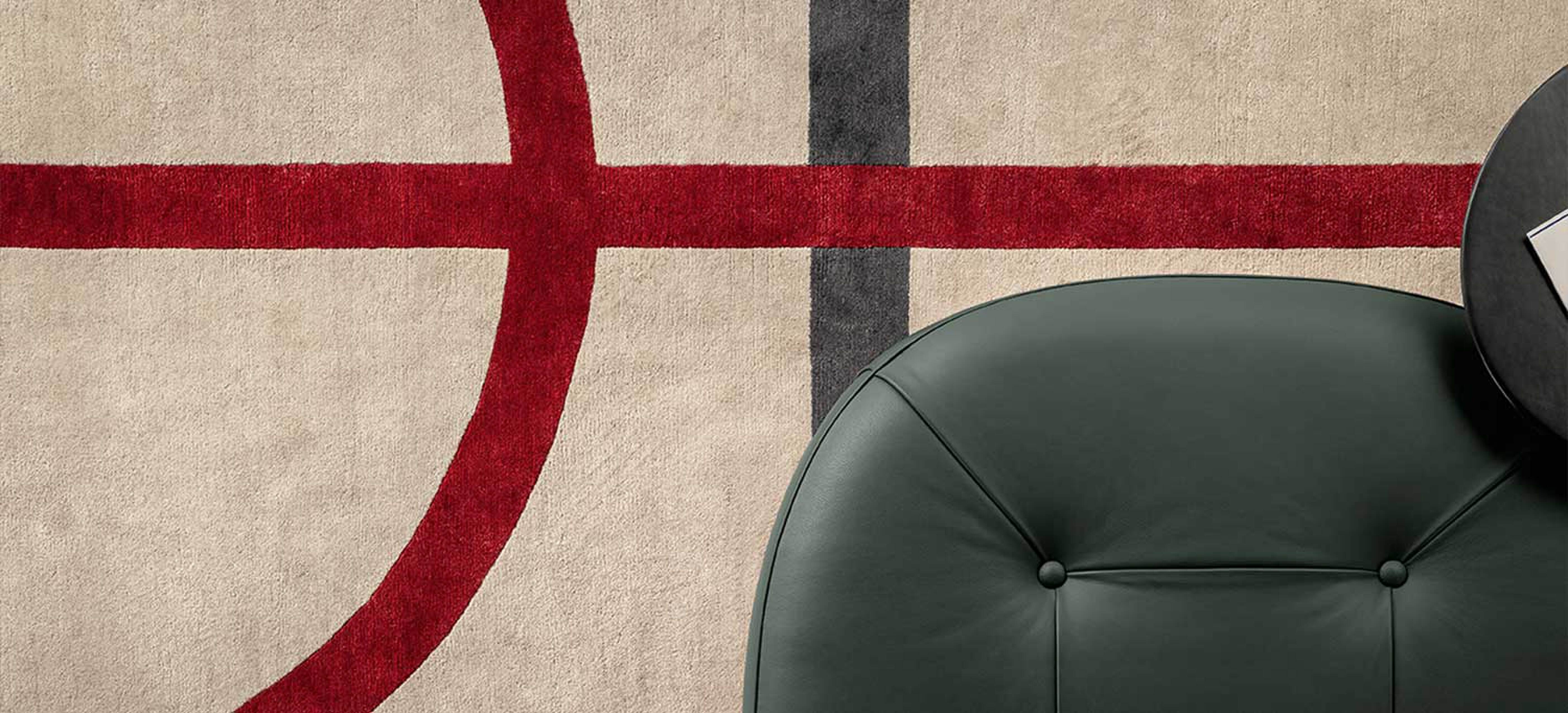
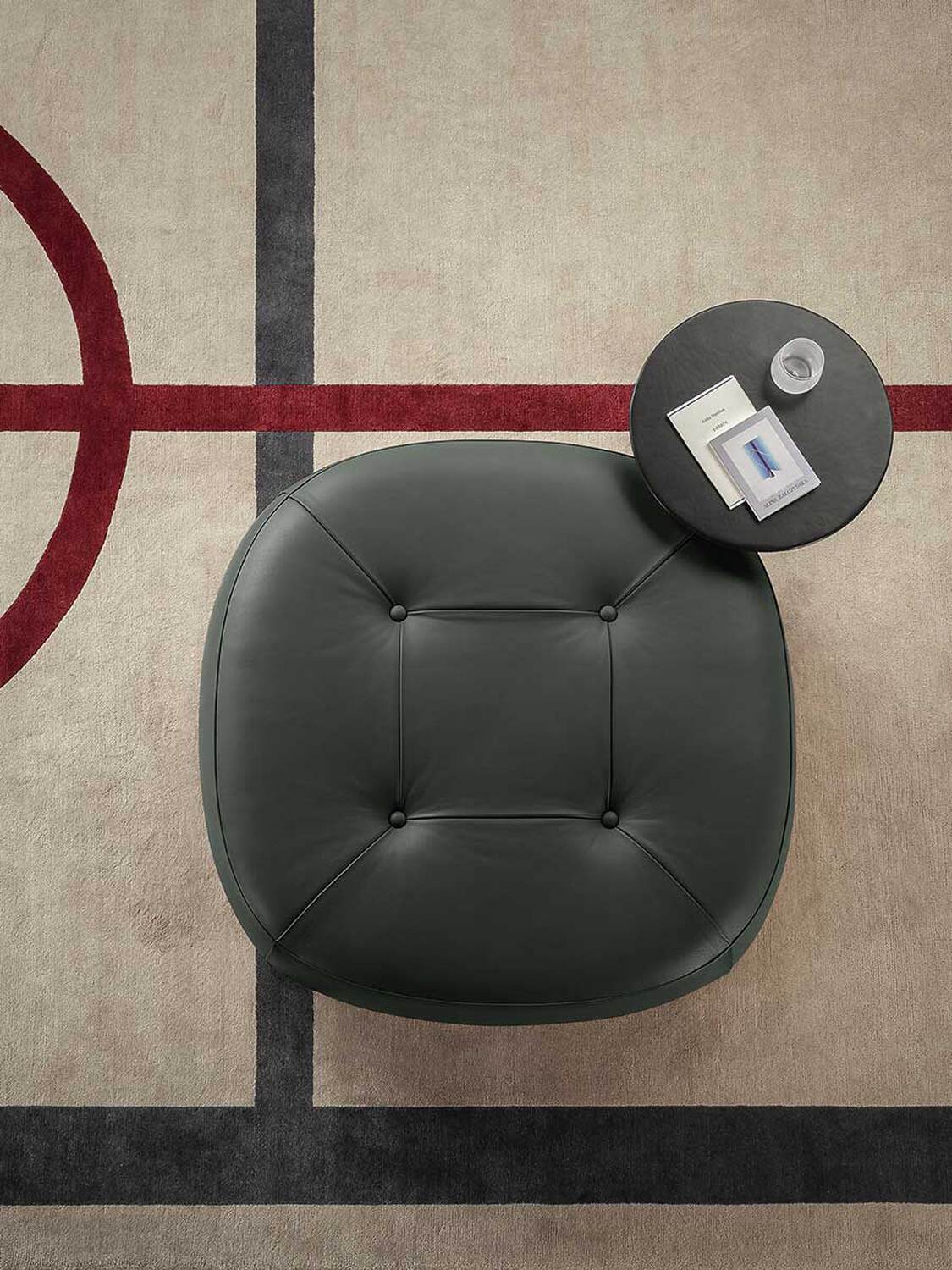
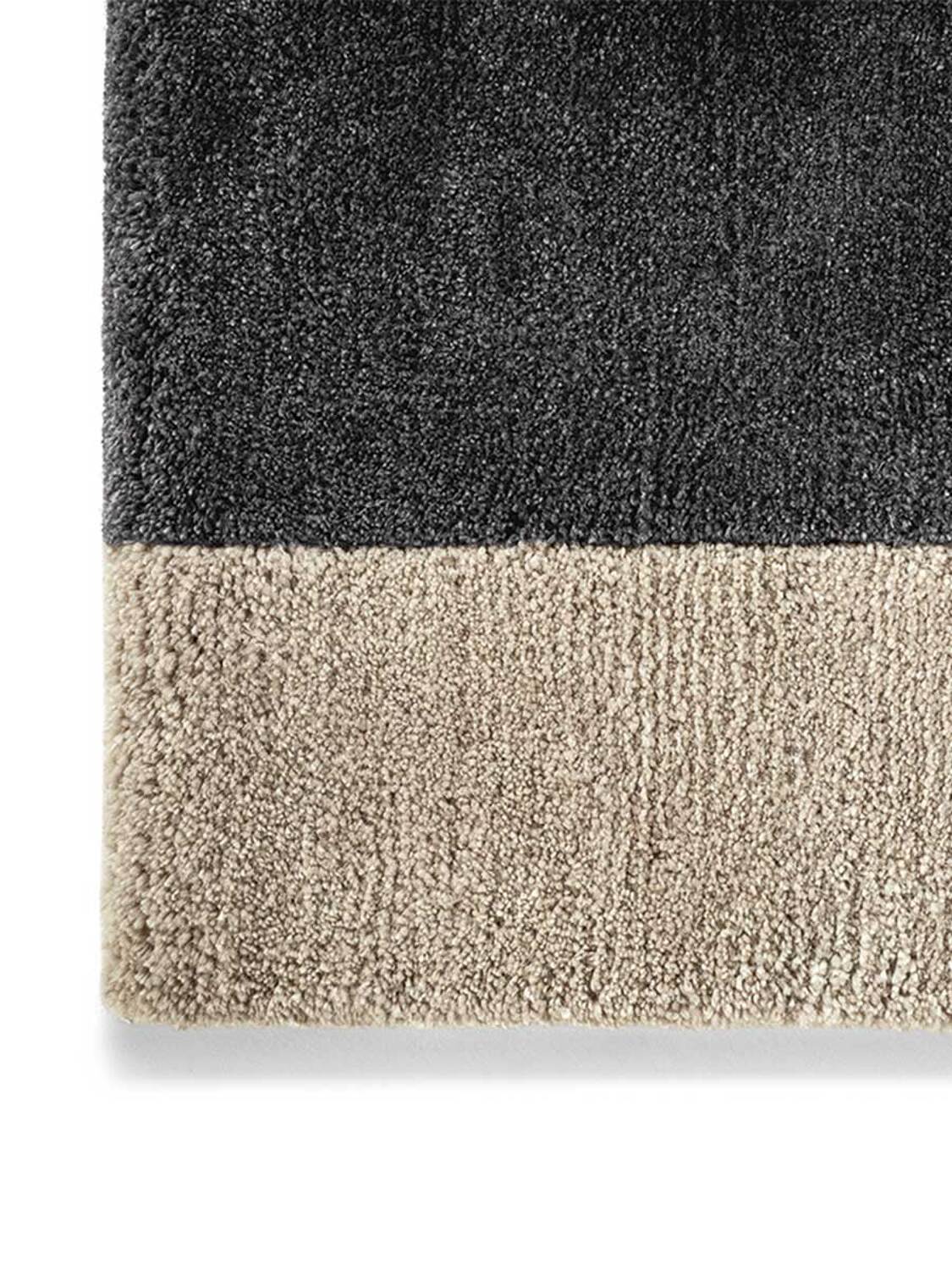
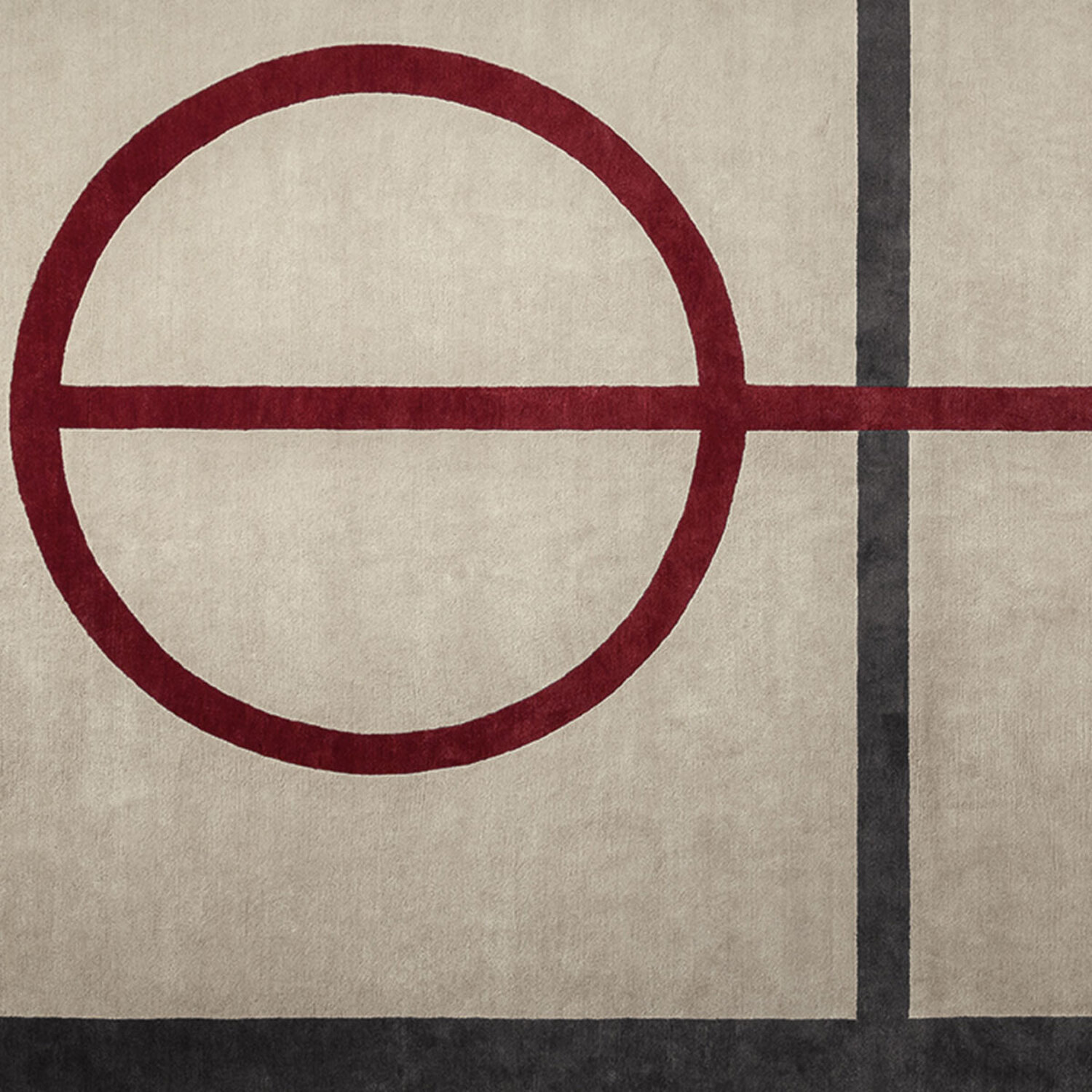
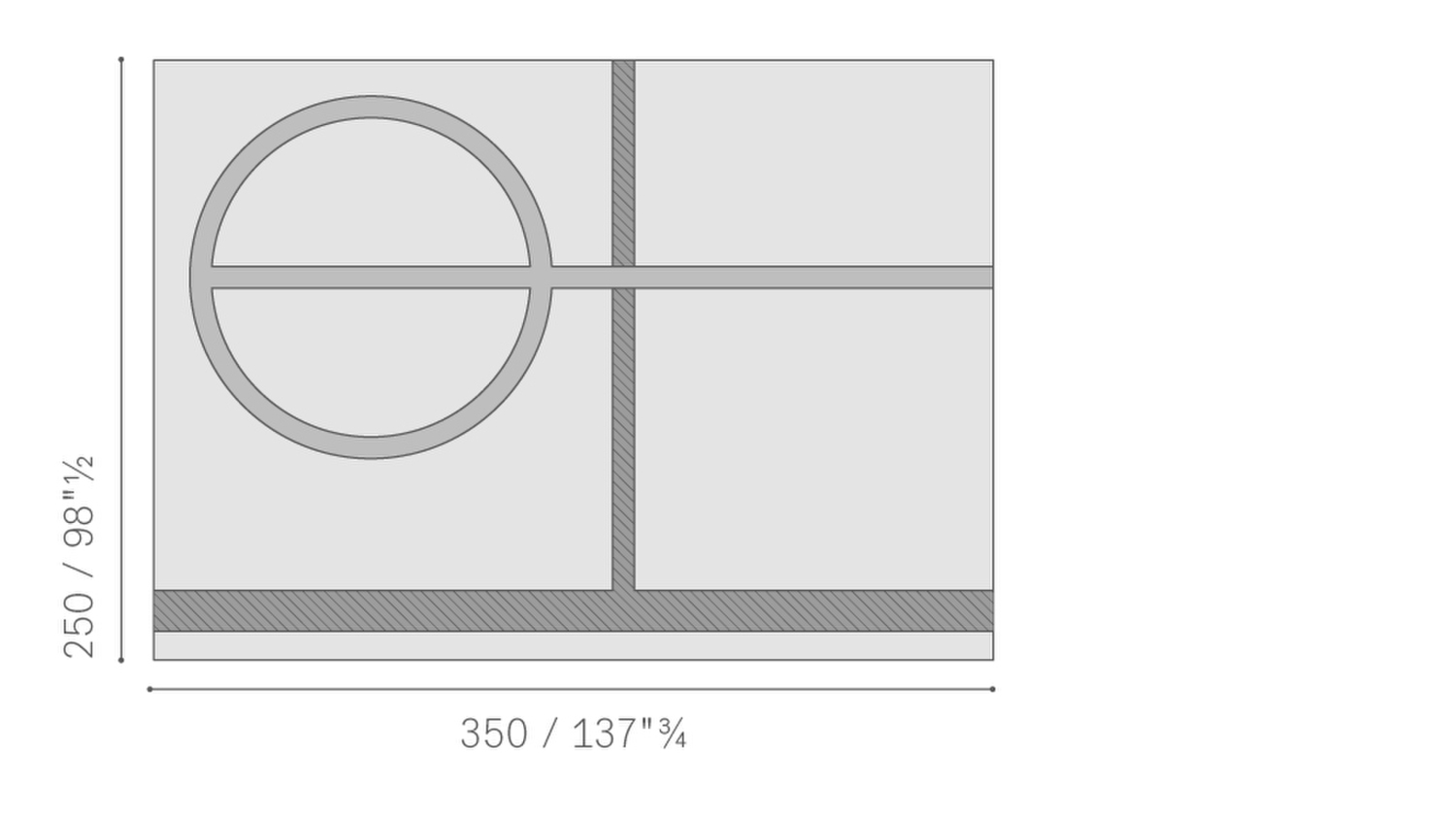
Billie has a rigorous, almost constructivist design that takes up most of the surface of the rug. The graphic is seemingly straightforward, consisting of a few elements highly calibrated in every single detail. Just two graphics on a neutral background: one an intense red, formed by a circle and a vertical line, and the other in anthracite coal grey and made up of two perpendicular lines. The result is a rug with strong formal balance and notable visual impact. In order to respect the original project and proportions, Billie is available in just one size, 250X350 cm, and one colour variant. It is refined with a hand-stitched woollen trim on all four sides.  

The Billie rug is entirely handmade on wooden looms using the Tibetan knot technique. Its knots are very dense, 70,000 per m2, to create a very compact and soft surface. It is 50% wool and 50% linen, carefully selected natural fibres that give the rug a velvety and slightly glossy appearance with chiaroscuro and different colour effects depending on your angle of perspective.  

The Billie rug is distinctive for the saddle-leather label hand-sewn on the back stamped with the Poltrona Frau logo. To keep the corners rigid, two strips of fabric are sewn onto the back of the rug and embroidered with Max Huber’s signature.

Item added to cart

Billie | Rug

Max Huber
Loading
Loading
Proceed with selection

Rug dimension

qty

Unit price

The price refers to the product configuration currently selected

Concept and Design
To mark the hundredth anniversary of the birth of Max Huber, Poltrona Frau pays homage to the famous Swiss artist and graphic designer with Billie and Dizzy, a collection of rugs based on drawings of two unproduced works taken from the archive and dating respectively to 1936 and 1947. The original designs have remained unchanged in terms of their proportions and the thickness of their lines and have simply been adapted to the dimensions of the rugs.  

The Billie rug is named after Billie Holiday, one of the most beautiful and soulful jazz voices of the early 20th century. A tribute to a genre of music much loved by the artist and a passion that influenced his work. As well as his famous works for Esselunga, La Rinascente, Coin, Rai and Montecatini, during his career Max Huber carried out lots of projects connected with this form of music, such as “Ritmo” magazine in 1950 and “Jazztime” in 1952, the cover of jazz encyclopaedia “Messaggerie Musicali” in 1952, and the poster for the “Jazz Chiasso weeks” festival of 1985.
max huber
Designed by
Max Huber

Max Huber was born in Baar, in the canton of Zug, in 1919 and after attending middle school he studied graphics at the Kunstgewerbeschule in Zurich, where he followed the lessons of Alfred Willimann with particular enthusiasm. During this period he made the acquaintance of numerous Swiss graphic designers and artists including Werner Bischof, Emil Schulthess, Josef Müller-Brockmann, Carlo Vivarelli, Hans Falk, Hans Neuburg and Max Bill. Eager to embark on a new experience, in 1940 Max Huber found work at the prestigious graphic design studio of Antonio Boggeri in Milan, where he met Bruno Munari, Luigi Veronesi and Albe Steiner. He returned to Switzerland just one year later due to the difficult political climate. Max Bill subsequently invited him to join Allianz, the association of modern Swiss artists that formed part of the “concrete art” school and whose other members included Hans Arp and Richard Paul Lohse.

In October 1945 he returned to Milan and together with Albe Steiner created the graphic design project for the VIII Triennale of 1947. In this period he met Giulio Einaudi who made him creative director of his publishing house. The same year he designed the graphics project and the little catalogue for the Abstract and Concrete Art exhibition curated by Max Bill with Lanfranco Bombelli Tiravanti at the prestigious Palazzo Reale in Milan. In 1949, still in the capital of Lombardy, he joined the Concrete Art Movement founded the previous year by Gillo Dorfles, Gianni Monnet, Bruno Munari and Atanasio Soldati and took part in the IV “cartella grafica”. Later, from the 1950s onwards, he distinguished himself in the graphic design sector. Examples of his work include the corporate identities of La Rinascente, Coin, Nava and supermarket chain Esselunga, as well as installations for the Omega and Flos showrooms in Milan. At this time he also began a prolific collaboration with architects/designers Achille and Pier Giacomo Castiglioni, sharing, with his archigraphic project, his ideas for numerous installations for Rai, Eni and Montecatini (later Montedison). Public acclaim would soon follow and in 1954 Max Huber was awarded the Italian “Compasso d’Oro” design prize for his design for a “plastic fabric”. Not to be overlooked is his long and continuous teaching career which he began in Milan at the Rinascita school in 1947, continued between 1959 and 1962 at the Umanitaria, and resumed once more in the 1970s at the Scuola Politecnica di Design directed by Bruno Munari with Nino Di Salvatore. Between 1978 and 1984 Max Huber took his teaching experience to Switzerland, teaching graphic design at the CSIA-Centro Scolastico Industrie Artistiche in Lugano. He died on 16 November 1992.

Coverings and finishes

Dimensions
01 billie rug 5623888
View all
Downloads

2d dwg

Billie is a rug that defines a space with confidence while maintaining a strong sense of balance. Its disciplined design, inspired by the graphic universe of Max Huber, transforms the surface into an architectural element capable of engaging precisely with furnishings, volumes, and colors. Set against a neutral background and punctuated by a few bold, recognizable graphic elements, it is particularly well suited to those seeking a rug with a strong visual identity while preserving an environment that feels orderly, sophisticated, and cohesive.


In a contemporary living room, Billie works exceptionally well as the focal point of the conversation area. Its generous dimensions help organize the space visually, creating continuity between sofas, armchairs, and the central coffee table. It is an ideal solution for those who wish to structure a living area around a large statement rug, especially in interiors characterized by neutral palettes, rich material textures, and carefully selected design pieces. The contrast between the understated background and the red and anthracite graphic accents adds rhythm and energy without creating visual clutter, making it perfect for homes where quality takes precedence over excess.


Its presence is particularly effective in minimalist and modernist interiors, where every element is expected to fulfill a clear visual purpose. Billie is ideal for those who want to introduce an artistic accent into a restrained setting while maintaining a sense of rigor. In spaces featuring light-colored walls, seamless flooring, low-profile furnishings, and materials such as wood, glass, painted metal, or leather, the rug creates a measured point of visual tension that adds character without compromising the overall clarity and balance of the composition.


In the dining area, particularly in spacious rooms or thoughtfully designed open-plan environments, Billie can be an excellent choice for those looking for a substantial rug beneath the dining table. It has the ability to enhance not only the table itself but also the overall volume and presence of the room. Its balanced graphic composition makes it particularly suitable for contemporary dining tables, upholstered seating, architectural lighting schemes, and interiors that express personality through a carefully curated selection of elements.


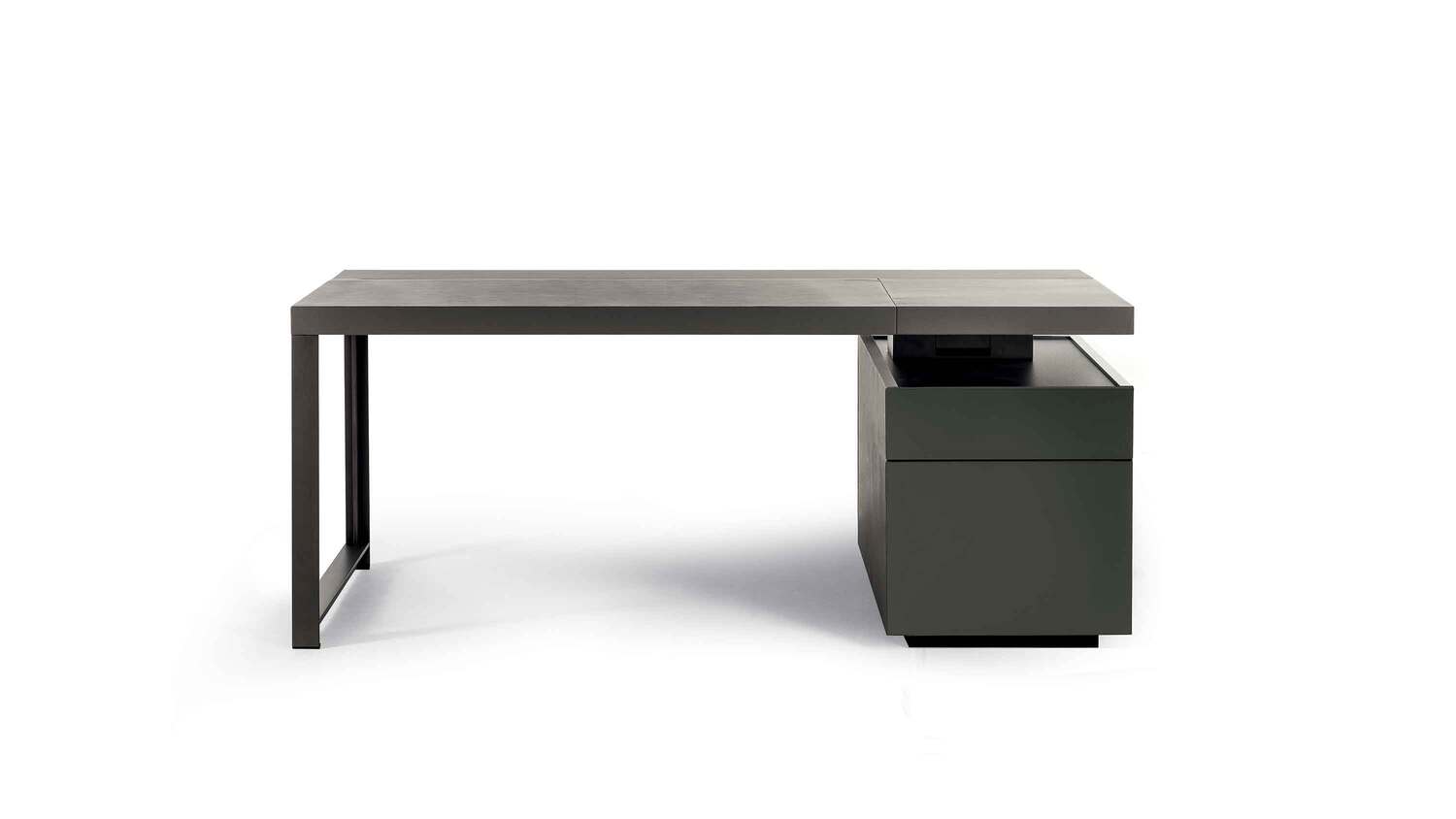
Billie also finds a compelling place in professional studios, executive offices, and creative workspaces. In these settings, it responds well to the desire for a textile element that communicates visual culture, design sensitivity, and authority. It is not a decorative rug intended to remain in the background; its graphic identity reflects attention to detail, an appreciation for thoughtful design, and a deep respect for twentieth-century art and design. For this reason, it is particularly suited to professionals, creatives, architects, collectors, and individuals seeking a workspace that is both representative and distinctive.


From a material perspective, the combination of wool and linen contributes to a tactile and visual richness that is particularly appealing. Handcrafted using the Tibetan knot technique, its surface offers a soft, subtly shifting appearance that changes according to the light and viewing angle. This makes it an excellent choice for those seeking a natural, artisanal rug that is not only beautiful but also capable of adding depth and sensory quality to a room. In interiors where leather, substantial fabrics, matte finishes, and metallic details coexist, Billie completes the design with an educated and understated presence.


Billie also appeals to those who appreciate internationally inspired interiors, where Italian design, references to modernism, graphic art, and an awareness of design history come together. In these settings, it fulfills the desire to introduce a decorative object with genuine cultural value—one that is not merely ornamental but carries a distinct narrative and design heritage. Its almost artistic character makes it particularly suitable for spaces where a rug is chosen not simply to fill a surface, but to actively contribute to the story of the environment.


Billie is therefore a compelling choice for those who seek an interior that is orderly yet never anonymous, for those looking for a rug that defines space through graphic elegance, for those who want a contemporary gesture capable of energizing a neutral palette, and for those who favor furnishings that combine craftsmanship, design culture, and visual presence. Whether in a private residence, a professional studio, or a refined hospitality setting, its language remains distinctive yet controlled, capable of making a lasting impression with precision and restraint.