



Access to the reserved area to download the technical material
1
result
 Search

Ivo Pannaggi
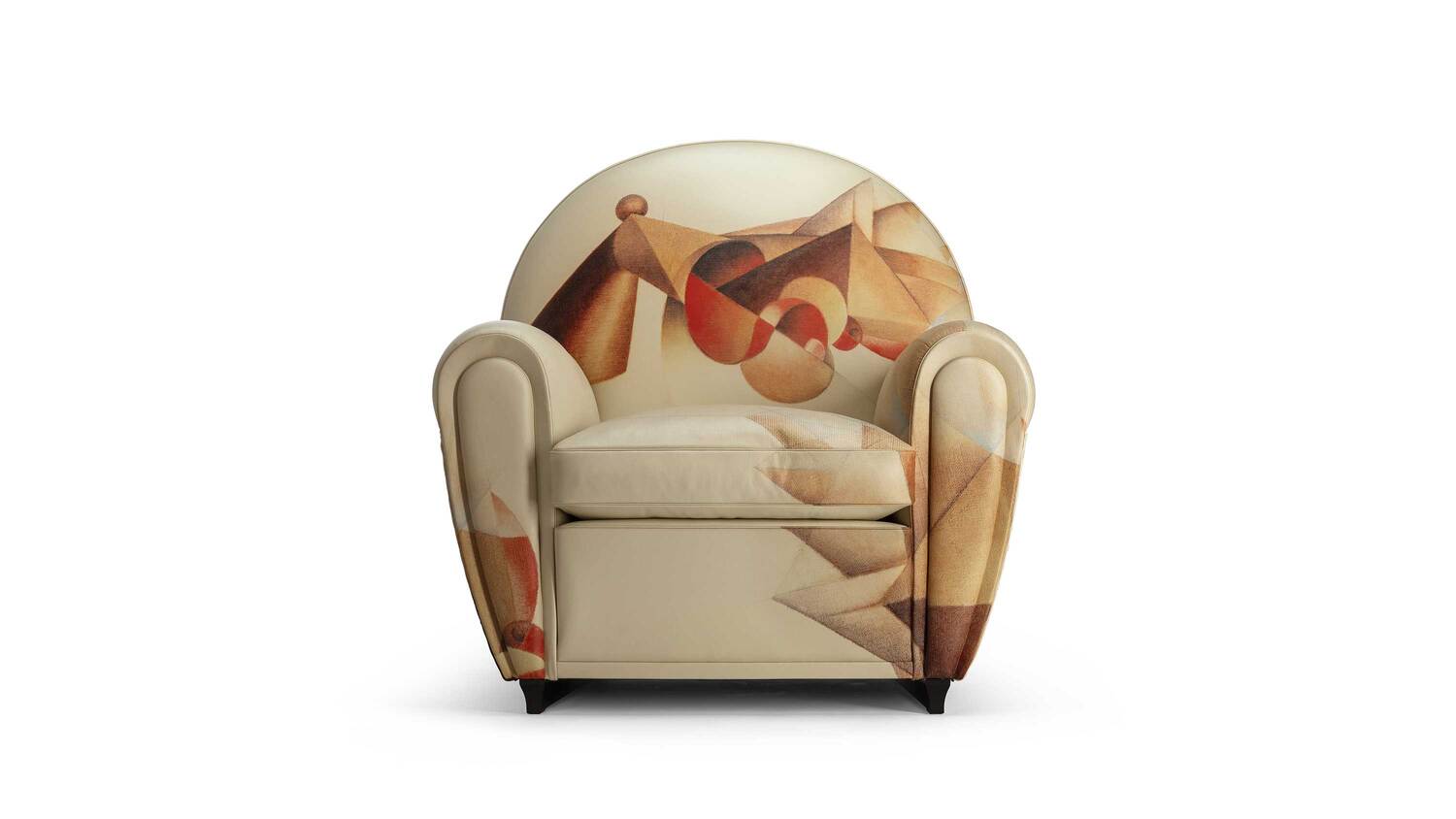
A painter, architect and designer, Ivo Pannaggi was one of the most distinctive multidisciplinary figures of Italy’s Second Futurism. After a classical education, he moved to Rome in 1919 to attend university. There, he became part of the city’s avant-garde circles, forming close connections with other Futurist artists, including Vinicio Paladini, Enrico Prampolini, Fortunato Depero and Gerardo Dottori. His early paintings soon attracted the attention and admiration of Filippo Tommaso Marinetti, the founder of Futurism, and Giacomo Balla, one of the movement’s leading figures. Driven by a constant desire to experiment, Pannaggi explored a wide range of disciplines, from painting, sculpture and caricature to theatre design, interiors, objects, graphics and photomontage. In 1922, together with Vinicio Paladini, he signed the Manifesto of Futurist Mechanical Art, embracing the machine, movement and progress as symbols of a new aesthetic sensibility. His research later evolved through an active dialogue with the European avant-gardes and the Bauhaus experience.
During this period, he developed connections with leading modernist architects such as Walter Gropius, Marcel Breuer and Mies van der Rohe, all key figures associated with the Bauhaus and modern architecture. He shared their belief in the integration of art, architecture, craftsmanship and industry, helping to introduce this design culture to Italy. In 1942, Pannaggi moved to Norway, where he began a new chapter as an architect and designer. Between 1968 and 1971, he returned to painting, focusing on the themes of motorcyclists and centaurs. In 1971, he returned to Macerata, where he died ten years later. Rooted in the Marche region, a territory that would later become central to Poltrona Frau’s story, Pannaggi left a legacy shaped by artistic experimentation, design rigour and a forward-looking vision: values that continue to inspire the dialogue between creativity, craftsmanship and design.
Access to the reserved area to download the technical material
Have you not registered yet?
You are browsing in a different country than your location. We suggest you to properly locate yourself to make purchases. (final)